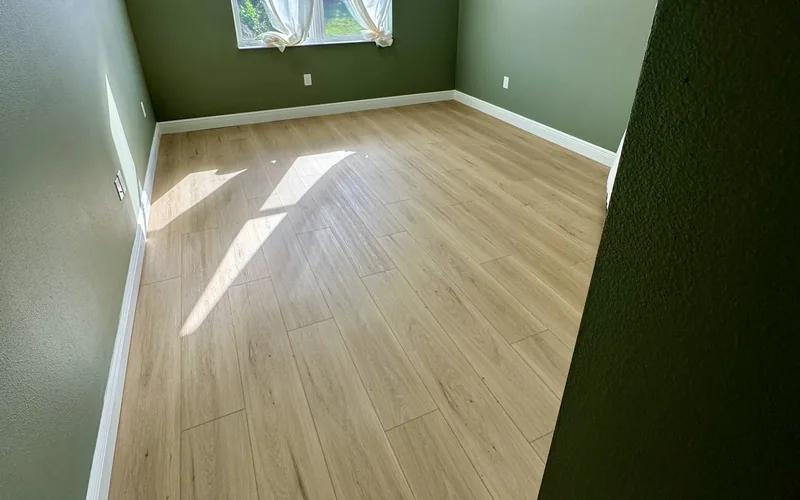
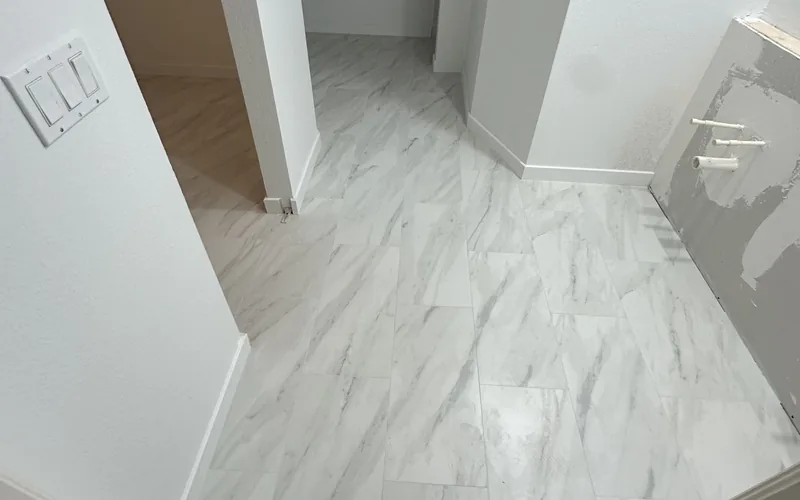
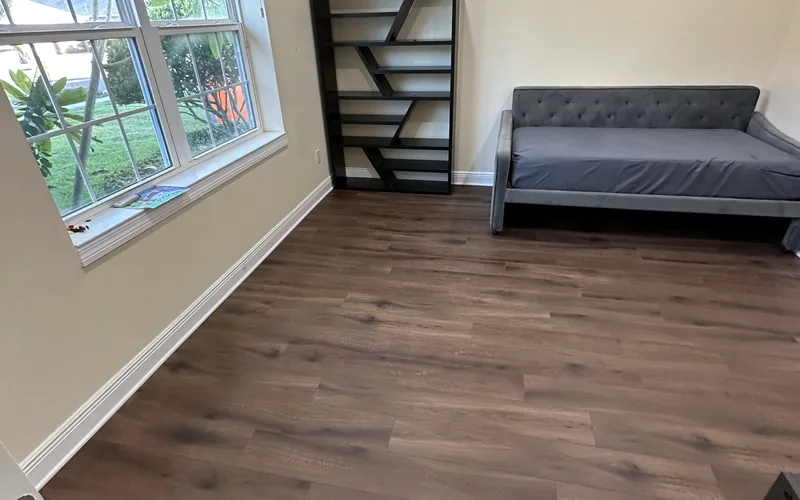
For most Florida homes, luxury vinyl plank (LVP) wins on comfort, cost, and DIY-friendly water resistance, while porcelain tile wins on heat tolerance, longevity, and resale appeal. Pick LVP for bedrooms and budgets; pick porcelain for sun-baked great rooms, lanais, and homes you plan to sell.
Which is actually better for a Florida home?
Neither one is the universal winner — they win in different rooms. I install both across Bradenton, Sarasota, and Tampa, and the right call usually comes down to where the floor lives and how long you plan to stay.
Choose LVP if you want a warmer, quieter, faster, cheaper floor that still shrugs off spills — great for bedrooms, closets, and most of a rental. Choose porcelain tile if you want a floor that lasts 50+ years, stays cool in a sun-drenched room, and reads as “permanent” to a future buyer.
- Tight budget or DIY install → LVP
- Sun-baked great room, entry, or lanai → porcelain
- Planning to sell in the next few years → porcelain leans ahead
- Kids, dogs, and dropped toys → LVP is more forgiving underfoot
How does each handle Florida heat and direct sun?
This is where porcelain pulls ahead. Porcelain tile is fired clay — it does not expand, soften, or fade when a slab heats up under a wall of west-facing windows. It actually feels cool underfoot, which is a real perk in July when the AC is fighting an 95-degree afternoon.
LVP is a plastic-based product, so heat matters more. Cheap planks installed in direct sun over a hot slab can expand, gap, cup at the edges, or telegraph the heat. The fix is simple but non-negotiable in Florida: use a rigid SPC (stone-polymer composite) core rated for high heat, leave proper expansion gaps at every wall, and avoid very dark planks in rooms that bake all afternoon. Dark surfaces absorb more solar gain and push the plank closer to its limit. Quality LVP installed correctly holds up fine for years; bargain-bin glue-down in an uninsulated sunroom does not.
One Florida-specific detail people miss: a vacant house with the AC off in summer can hit 100°F+ inside. That heat-soak cycle is harder on floating LVP than on tile. If you own a seasonal home, a rental between guests, or a flip that sits empty, porcelain is the lower-risk floor. If you have a screened lanai or a room that gets brutal western afternoon sun, I usually steer homeowners toward porcelain to avoid callbacks.
Which survives humidity, spills, and flooding better?
Both are waterproof on the surface — neither absorbs a spill, warps from a splash, or feeds mold the way hardwood or laminate can. That makes both smart picks for our 70–85% humidity. But “waterproof plank” and “waterproof floor” are not the same thing.
Porcelain tile set in thinset over a properly prepped slab is the closest thing to a flood-proof floor you can buy. If water gets under it, the tile and grout don’t care; you dry the slab and move on. LVP is waterproof plank-by-plank, but a floating click floor can trap water underneath in a real flood event, which means pulling planks to dry the slab.
| Water scenario | LVP (floating) | Porcelain tile |
|---|---|---|
| Daily spills & mopping | Excellent | Excellent |
| High humidity | Excellent | Excellent |
| Storm/flood with standing water | Good — may need planks lifted to dry slab | Best — dries in place |
For flood-prone, ground-floor, or coastal homes, see our waterproof flooring guide for Florida before you decide.
Which adds more resale value in Tampa Bay?
Honest answer: porcelain tile generally reads as the more premium, permanent floor, especially in main living areas, kitchens, and entries. Buyers and agents in our market expect tile in the “wet” and high-traffic zones, and it photographs as a long-term upgrade that won’t need replacing on the new owner’s dime.
That said, mid-to-high-grade LVP has closed the gap fast. A clean, consistent wood-look LVP run continuously through a home shows beautifully, feels current, and removes the “dated tile” objection that hurts homes still wearing 18-inch beige squares from the early 2000s. Where LVP loses points is when buyers can tell it’s a thin builder-grade plastic floor in an otherwise higher-end home — the mismatch reads as a corner cut.
Across most studies, new flooring of either type recoups a meaningful share of its cost at sale; the bigger lever is condition and consistency, not the material label. A worn floor of any kind costs you at the negotiating table, while a fresh, neutral floor throughout removes objections.
- Best resale move: porcelain in kitchen/baths/entry, quality LVP or hardwood in bedrooms
- Rentals & flips: LVP throughout — cost and speed usually beat the resale bump of tile
- Forever home: porcelain pays off over decades of wear
- Coastal / flood-zone resale: tile reassures buyers worried about water
What about comfort, noise, and pets?
LVP is the comfort winner. It’s warmer underfoot, softer on knees and dropped dishes, and noticeably quieter — a real factor in two-story homes and condos. Porcelain is hard and can be loud, and a dropped glass shatters every time.
For pets, both resist scratches well, but LVP’s wear layer handles dog nails without chipping, and its grip is easier on older dogs than slick tile. Porcelain wins on accidents — nothing soaks in, and grout sealing keeps odors out.
| Factor | LVP | Porcelain tile |
|---|---|---|
| Underfoot comfort | Warmer, softer | Hard, cool |
| Noise | Quiet | Can be loud |
| Pet nails & traction | Better grip, forgiving | Slick, but scratch-proof |
| Expected lifespan | 15–25 years | 50+ years |
| Repairs | Swap a plank | Match tile & grout |
What does each cost installed in 2026?
Here’s where the decision often gets made. In the Tampa Bay / Sarasota–Manatee market in 2026, installed LVP typically runs less than porcelain once you factor in tile’s slower, labor-heavy install and slab prep. These are realistic ranges — your number depends on grade, layout, and subfloor condition.
| Floor | Material only | Installed (mat + labor) |
|---|---|---|
| Budget LVP | $2 – $3 / sq ft | $4 – $7 / sq ft |
| Mid/high-grade SPC LVP | $3 – $6 / sq ft | $7 – $12 / sq ft |
| Standard porcelain tile | $2 – $7 / sq ft | $8 – $15 / sq ft |
| Large-format / wood-look porcelain | $5 – $12 / sq ft | $12 – $20+ / sq ft |
Porcelain costs more up front mostly because of labor — layout, thinset, cutting, grouting, and slab prep take far longer than clicking planks together. A crew can float LVP across a great room in a day; the same room in large-format porcelain, set flat and lippage-free, is a multi-day job. Two cost factors catch Florida homeowners off guard: slab prep (grinding or self-leveling a wavy slab so big tiles don’t rock) and demo of old tile, which is dusty, heavy work that adds to the bill. LVP can sometimes float right over a sound existing floor, saving that step.
Over a 50-year horizon, though, tile’s cost-per-year can beat LVP that gets replaced once or twice. Think of LVP as the lower entry price and porcelain as the lower lifetime cost. Get firm numbers from our vinyl plank flooring and tile installation pages.
How should you choose room by room?
You don’t have to pick one for the whole house — and most of my Florida jobs mix both. A common, smart layout looks like this:
- Kitchen, baths, entry, laundry, lanai: porcelain tile — heat, water, and resale all favor it
- Bedrooms, closets, home office, bonus room: LVP — warmth, quiet, and lower cost where it matters less
- Open-concept main floor: pick one for continuity; large-format wood-look porcelain or premium LVP both work
If you’re repairing water-damaged or failing floors rather than starting fresh, we can scope a repair-or-replace plan first — start at vinyl plank flooring or compare materials in our waterproof flooring guide.
Pricing LVP or porcelain for your room in Lakewood Ranch, Bradenton or Sarasota
A common split is porcelain in the wet and sunny rooms and vinyl plank everywhere else. To price it, see vinyl plank in Lakewood Ranch and tile in Lakewood Ranch, or LVP installation in Bradenton and porcelain tile in Sarasota.
Frequently Asked Questions
Is LVP or porcelain tile better for Florida humidity?
Both handle our 70–85% humidity well because both are waterproof and won't warp or grow mold like hardwood. For day-to-day moisture they're equal; for standing-water flood events, porcelain has the edge because it dries in place while a floating LVP floor may need planks lifted.
Does LVP get damaged by Florida heat and sun?
Cheap LVP can expand or gap in rooms with intense direct sun over a hot slab. Quality SPC (stone-polymer composite) plank installed with proper expansion gaps holds up fine. In sun-baked rooms or screened lanais, porcelain is the safer choice.
Which adds more resale value, LVP or tile?
Porcelain tile generally reads as more premium and permanent, especially in kitchens, baths, and entries, and Tampa Bay buyers expect it there. High-grade LVP has narrowed the gap, but builder-grade plank in a higher-end home can hurt perceived value.
Is porcelain tile worth the extra cost over LVP?
If you're staying long term or flooring a high-sun, high-traffic, or wet area, yes — tile lasts 50+ years and its cost-per-year can beat LVP. For rentals, flips, or bedrooms, LVP usually delivers better value.
Can I install LVP and porcelain tile in the same house?
Yes, and most of our Florida jobs do exactly that. A typical mix is porcelain in kitchens, baths, entries, and lanais, with LVP in bedrooms, closets, and offices for warmth, quiet, and lower cost.
What does LVP vs porcelain tile cost installed in 2026?
In the Tampa Bay area, installed LVP typically runs about $4–$12 per square foot depending on grade, while porcelain runs about $8–$20+ per square foot, mostly due to higher labor for layout, thinset, and grouting.
Which is more comfortable underfoot?
LVP is warmer, softer, and quieter, which matters in bedrooms and two-story homes. Porcelain is hard and stays cool — pleasant in summer but less forgiving on knees and dropped dishes.