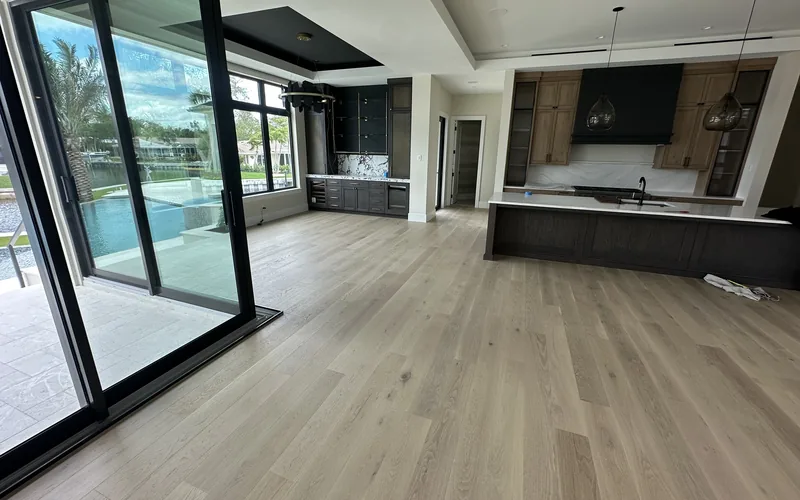
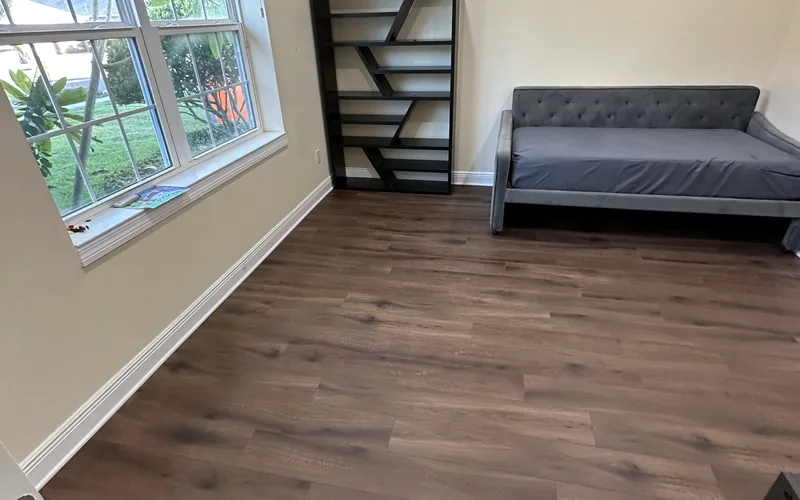
If your solid wood floors are structurally sound and still have at least 3/32 inch of wear layer left, refinish — it costs a fraction of replacement and buys decades. Replace only when boards are cupped, rotted, water-damaged below the finish, or sanded too thin. In Florida, moisture decides more cases than wear does.
Refinish or replace — how do you actually decide?
The decision comes down to two questions: is there enough wood left to sand, and is the wood (and the subfloor under it) still sound? If both are yes, refinishing is almost always the smarter money. If either is no, you're replacing.
Refinishing means sanding off the old finish plus a thin layer of wood, then re-staining and sealing. Replacing means tearing the old floor out and installing new boards. Here in Tampa Bay I see homeowners assume a tired-looking floor needs to be ripped out, when nine times out of ten a sand-and-seal makes it look new for a third of the price.
The catch in Florida is moisture. A floor that would be a slam-dunk refinish in a dry climate can be a teardown here if a slab leak, an AC drip, or a storm pushed water under the boards. So before you price anything, get the floor inspected for water damage and cupping.
| If you see this… | Lean toward |
|---|---|
| Dull, scratched finish; wood still sealed | Recoat or refinish |
| Gray traffic lanes, bare wood spots | Refinish |
| Cupping, crowning, or buckling | Investigate moisture, likely replace |
| Soft/spongy spots, musty smell | Replace (subfloor involved) |
| Already sanded 4–7 times, boards thin | Replace |
When is refinishing the right call?
Refinish when the damage is on the surface, not in the structure. Scratches, scuffs, sun fading, dullness, light pet wear, and surface stains all sand right out. If water never got below the finish and the boards are flat and tight, you're a refinishing candidate.
There's also a lighter option most homeowners don't know about: a buff and recoat (also called screen-and-recoat). If the finish is just dull and lightly scratched but still bonded with no bare spots, a crew lightly abrades the existing finish and lays a fresh coat — no deep sanding, no wood removed. It's cheaper, faster, and saves your wear layer for the future. We walk through this on our hardwood refinishing page.
- Floor looks dull or scratched but isn't gouged to bare wood
- You want a different stain color
- Boards are flat, tight, and free of moisture damage
- You've refinished fewer times than the wood can handle
Refinishing also pays off at resale. Buyers love real wood, and refinishing typically returns more of its cost than most remodels — industry data puts the ROI well above 100% — often higher than installing new wood, because you keep the existing material and only pay for labor and finish.
When do you actually need to replace the floor?
Replace when sanding can't fix the problem. The big triggers are structural damage, moisture damage that has reached the wood or subfloor, and boards that are simply too thin from past refinishing.
Specific signs it's a replacement, not a refinish:
- Cupping, crowning, or buckling — these are moisture-movement problems; sanding flat is temporary if the source isn't fixed
- Soft, spongy, or springy spots and a musty odor — the subfloor or joists may be rotted
- Deep gouges or nail heads showing — you've hit the end of the wear layer
- Termite or pest tunneling in the boards
- Widespread water staining that won't sand out
One nuance: you don't always have to replace the whole floor. If only a few boards are damaged — say from a fridge leak — a good crew can weave in replacement boards and then refinish the whole room so it blends. That's a floor repair job, not a full hardwood replacement.
How many times can hardwood be refinished?
This is the question that decides a lot of these calls. Solid 3/4-inch hardwood can usually be sanded 4 to 10 times over its life — the lower number for heavy, deep sandings and the higher number for light screen-and-recoats. Each full sanding removes roughly 1/32 inch of wood.
The limit is the tongue-and-groove. Once you sand down near the tongue (the part that locks boards together), there isn't enough wood above it to sand safely, and refinishing risks splintering or wear-through. At that point the floor has given you everything it had — a good run of 50 to 100 years for quality solid oak.
How do you know how much is left? Pull a floor vent or look at a doorway threshold and measure the board's thickness, or just have an installer check. If the wood above the tongue is getting thin, plan on replacement for the next round.
One thing I tell every Tampa Bay homeowner: don't refinish just for a color change if the floor doesn't need it. Every full sanding spends wear layer you can never get back, so save the deep sands for when the floor truly needs them and use a recoat in between.
Does engineered hardwood change the math?
Yes — a lot, and it matters here because so many Florida slab homes have engineered hardwood glued down. Engineered boards have a real-wood veneer over a plywood core, and you can only sand the veneer.
The rule of thumb: if the wear layer is thinner than 3/32 inch (about 2.5 mm), the floor should not be sanded at all. A 2mm veneer typically gets zero deep refinishes; a thicker 3mm+ wear layer can handle one to three light sandings.
| Floor type | Wear layer | Refinishes left |
|---|---|---|
| Solid 3/4" hardwood | 1/4"+ above tongue | 4–10 |
| Engineered (3mm+ veneer) | 3mm or more | 1–3 |
| Engineered (2mm veneer) | about 2mm | 0 (recoat only) |
So a scratched engineered floor with a thin veneer often points toward a recoat (no sanding) or, if the damage is real, replacement — because you can't sand your way out of it.
What does each option cost in Tampa Bay in 2026?
Refinishing is dramatically cheaper than replacing — that's the whole reason to do it. In the Tampa Bay / Sarasota–Manatee market, here's the lay of the land for 2026. These are ranges; your floor's size, condition, and stair count move the number.
| Option | What it covers | Typical 2026 cost |
|---|---|---|
| Buff & recoat | Light abrade + new top coat, no sanding | $1 – $2.50 / sq ft |
| Full refinish (sand, stain, seal) | Standard or dustless sanding | $3 – $8 / sq ft |
| Stair refinishing | Hand-sanded, per step | $25 – $85 / step |
| New hardwood, installed | Material + labor, solid or engineered | $6 – $25 / sq ft |
| Old floor removal + haul | Tear-out before new install | $1 – $2.50 / sq ft |
| Subfloor repair (if rot) | Damaged subfloor / joists | $1,000 – $3,000+ |
Put simply: a typical room refinish lands in the four-figure range, while full replacement of the same room runs two to four times higher once you add tear-out and possible subfloor work. Dustless sanding adds roughly $2/sq ft but keeps the mess (and allergens) down — worth it in an occupied house.
What's the Florida-specific factor most people miss?
Moisture. Our 70–85% humidity and slab-on-grade construction mean wood floors live a harder life than they would up north. Cupping — where board edges rise higher than the center — is the number-one reason a Florida floor that looks refinishable is actually a moisture problem.
If you sand a cupped floor flat while it's still wet underneath, the boards will dry, shrink, and leave you with crowning or gaps. The right order is: find and fix the moisture source, let the wood acclimate back to normal moisture content, then decide on refinishing. If a slab leak or storm flooding soaked the boards, replacement of the affected area is usually the honest answer — see our guide to water-damaged hardwood repair.
Bottom line for Tampa Bay homeowners: judge the floor by its condition and moisture history, not its age. A 25-year-old oak floor with a sound subfloor is a refinish; a 6-year-old engineered floor that took on water can be a teardown.
Frequently Asked Questions
Is it cheaper to refinish or replace hardwood floors?
Refinishing is far cheaper — typically $3 to $8 per square foot versus $6 to $25 per square foot installed for new hardwood, before tear-out and subfloor work. Unless the wood is structurally damaged or too thin to sand, refinishing is the better value.
How do I know if my floor has enough wood left to refinish?
Pull a floor vent or check a threshold and look at the board thickness above the tongue-and-groove. Solid 3/4-inch boards usually allow 4 to 10 sandings total; engineered veneers under 3/32 inch (about 2.5 mm) generally can't be sanded at all. When in doubt, have an installer measure it.
Can cupped or buckled hardwood be saved by refinishing?
Not reliably. Cupping and buckling are moisture problems, not surface problems. You must fix the moisture source and let the wood dry before doing anything; sanding a still-wet floor flat just leads to gaps or crowning later. Severe cases need board replacement.
How often do hardwood floors need refinishing in Florida?
Most floors need refinishing every 7 to 10 years, sooner in high-traffic or pet households. But judge by condition, not the calendar — if the finish is intact, a buff-and-recoat every few years can postpone full sanding and stretch the floor's life.
Can engineered hardwood be refinished?
Sometimes. It depends entirely on the wear-layer thickness. A 3mm or thicker veneer can usually take one to three light sandings; a 2mm veneer typically can't be sanded and is limited to a recoat. Many Florida glue-down engineered floors fall in the thin range.
Do I have to replace the entire floor if only part is damaged?
No. If only a few boards are damaged — from a leak or a dropped appliance — a crew can weave in matching replacement boards, then refinish the whole room so it blends seamlessly. That's a repair-plus-refinish job, not a full replacement.
Does refinishing add value before selling a Tampa Bay home?
Yes. Real wood is a strong selling point, and refinishing recovers a high share of its cost — industry figures put it well above 100% ROI. Fresh, even floors photograph well and remove a common buyer objection without the expense of new flooring.